
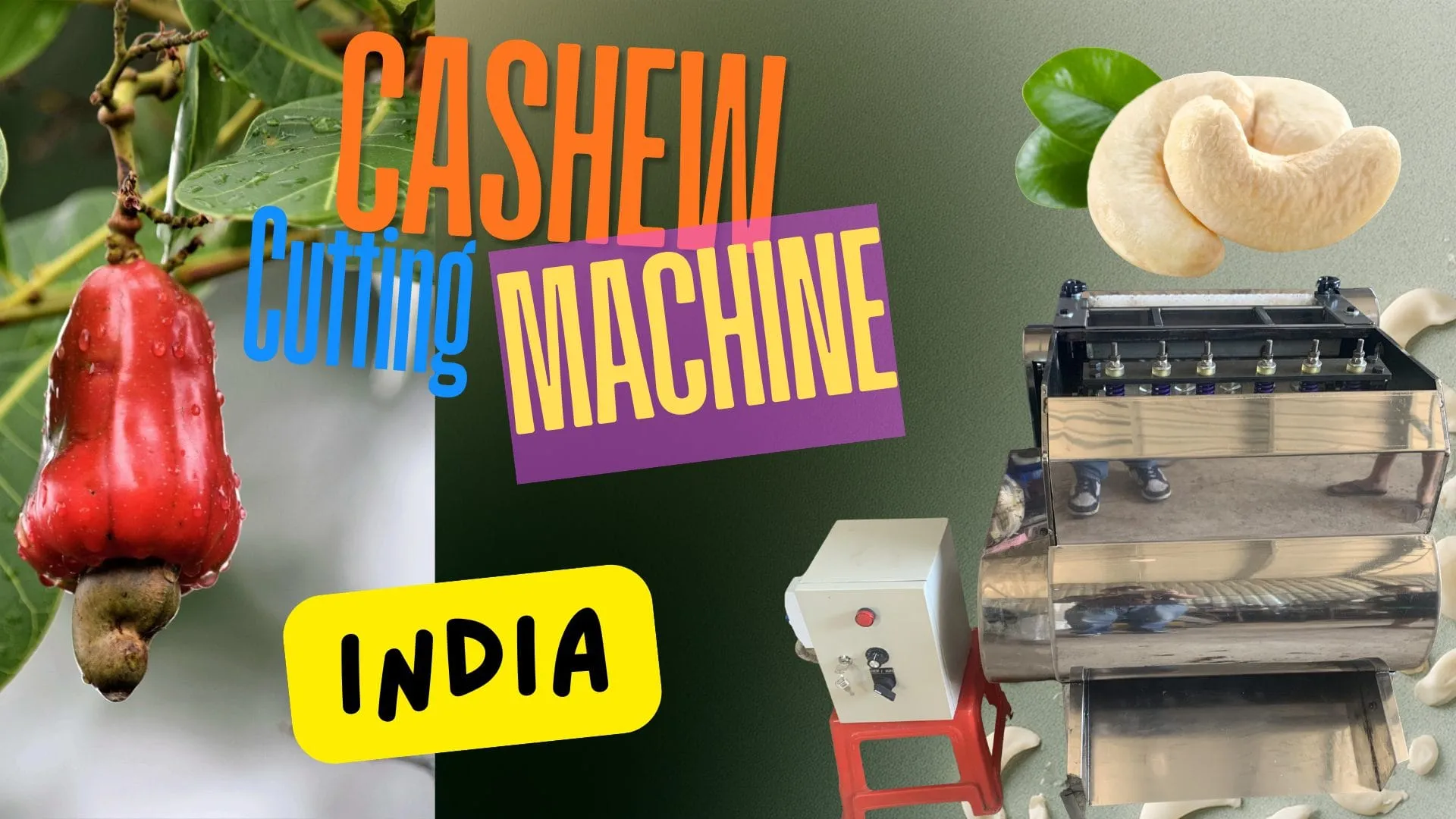
India occupies a unique position in the global cashew trade: it is both a long-established grower of raw cashew nuts (RCN) and, by a wide margin, the world’s largest processing and consumption market for cashew kernels — a scale reflected in the government-established Cashew Export Promotion Council of India, which has coordinated the country’s cashew export trade since 1955. Domestic cultivation alone does not come close to meeting the volume that India’s processing sector runs each year, so the country imports substantial quantities of RCN — much of it from West and East African origins — to keep its cutting and peeling lines supplied through the season.
Scale of processing
Precise, universally agreed figures are hard to pin down because they shift with harvest conditions, import flows, and how “processed” volume is counted, but India’s processing sector is generally estimated to handle somewhere in the range of 700,000 to 750,000 metric tons of RCN annually when domestic and imported nuts are combined. Only a portion of that comes from Indian orchards; the remainder arrives by sea from African supplying countries specifically to feed processing capacity that has grown well beyond what local cultivation supports. This import-dependent model is one of the defining features of the Indian cashew industry and shapes everything from factory scheduling to the mix of nut sizes a cutting line has to handle in a single week.
Established processing hubs
Cashew processing in India is concentrated in a handful of states with decades of accumulated expertise. Kerala remains the historic center of the industry, with a dense cluster of processing units built around its traditional role in cashew trade. Tamil Nadu, Odisha, and Andhra Pradesh have each developed significant processing capacity as well, drawing on both regional cultivation and imported RCN — within Tamil Nadu, Panruti in particular is one of the country’s most recognized cashew-processing towns. Together these states form a processing base that combines generations of hand-cutting skill with a growing appetite for mechanized equipment that can lift throughput without abandoning the quality standards the industry is known for.
Why cutting-machine choice matters here
India’s dual identity as grower and importer creates a specific challenge at the cutting stage: a single factory may run domestically grown nuts one week and African-origin RCN the next, and the two can differ noticeably in size, shell hardness, and moisture behavior after steaming. A cutting machine that only performs well on a narrow, consistent nut profile will show inconsistent outturn as the feedstock mix shifts through the season. Processors here generally do best with equipment that tolerates reasonable variation in nut size and shell condition without requiring constant recalibration, and with a blade and cup design that stays serviceable under near-continuous, multi-shift operation — a common pattern in India’s higher-volume processing units.
Labor availability and skill also factor into machine choice. Many Indian processing units draw on a workforce with long-standing hand-cutting experience, which makes manual and semi-manual head-count machines a natural fit for operations scaling up production without a full shift to automation. Larger, export-oriented facilities weighing a move toward automatic cutting lines need equipment that can keep pace with high daily volumes while still accommodating the mixed-origin nut supply typical of the Indian market.
Where OUTTURN’s factory-direct model fits
OUTTURN manufactures its cutting machines factory-direct out of Bình Phước, Vietnam, and ships to processors across Africa, Asia, and South America, including buyers in India’s established processing states. Sourcing factory-direct removes the markup and communication delay that comes with layered distribution, and it means Indian processors can get specifications, lead times, and after-sales support straight from the people building the machines. Because OUTTURN’s manual line scales from smaller head-count machines up through higher-capacity and automatic options, processors can size a purchase to their current volume and expand later without switching equipment families.
Next steps
If you’re evaluating cutting equipment for a processing unit in India, start by mapping your typical RCN mix — domestic versus imported, and the size range you expect across a season — against the throughput you need per shift. From there, reach out to OUTTURN with your target daily volume and current workforce size so we can recommend a head count or automatic configuration that fits, and request a quote for factory-direct pricing and shipping to your port of entry.