
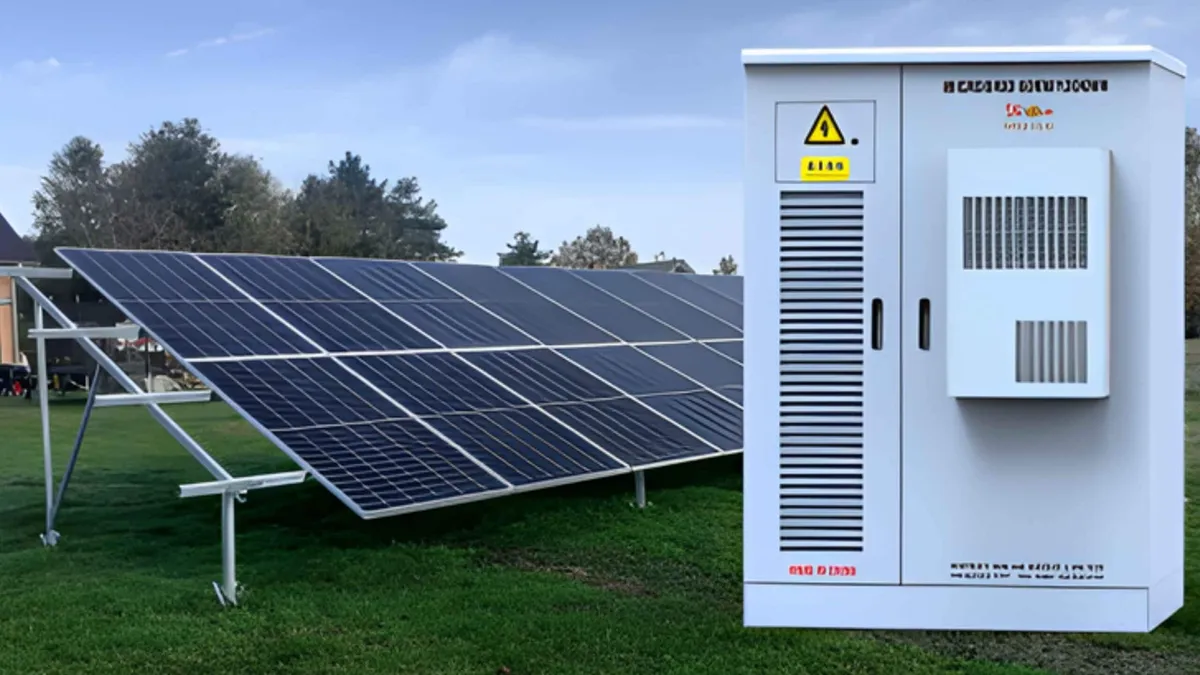
Start With an Honest Load Estimate
Every solar design mistake we see traces back to the same root cause: the factory load was estimated, not measured. Before sizing a single panel, list every electrical load on the floor with its rated power draw (kW), how many hours a day it actually runs, and how many run at the same time. Multiply draw by runtime to get daily kWh per load, then add them up. That total daily kWh figure — not the sum of nameplate kW ratings — is what actually drives system size.
Cutting machines
Cashew cutting is usually the most predictable load on the floor because it runs steadily through the shift rather than cycling on and off. A single motor driving a multi-head cutting line, rather than one motor per head, keeps this number lower than processors often assume when they first add up nameplate kW across every cutting station.
Dryers, steamers, and water pumping
Pre-cutting steaming and post-cutting kernel drying are frequently the largest energy items on a cashew line, but not always the largest electrical items. Where heat comes from biomass, diesel, or LPG, electricity there is limited to blowers and controls. Where drying is fully electric, it can dwarf every other load combined — measure it separately before assuming solar can cover it economically. Water pumping for washing and steaming is typically modest, often under a couple of kW, but runs intermittently and is easy to forget in a load table.
Lighting and auxiliary loads
Shed lighting, office equipment, grading-room fans, and small tools rarely add up to much power individually, but they run across the full working day and across every corner of the site, so they’re worth totaling honestly rather than rounding down.
Grid-Tied, Off-Grid, or Hybrid: Choosing the Right Architecture
Many cashew processing sites across Africa and Asia sit in areas where grid power exists but is unreliable — scheduled load-shedding, voltage sag during peak demand, or outages during storms. That reality shapes which architecture makes sense.
A grid-tied system, with no battery, is the lowest-cost option and works well where the grid is reasonably stable: solar covers daytime load and the grid fills gaps, with export credit available in some markets. A hybrid system adds battery storage alongside the grid or a generator, so production keeps running through short outages without over-building for worst-case weather. A fully off-grid system, sized with enough battery and generator backup for sustained cloudy periods, is generally reserved for sites with no practical grid connection at all, since it’s the most capital-intensive path per kWh delivered.
Sizing Battery Storage for Continuous Operation
Battery sizing should be driven by how many hours of autonomy you actually need, not by an attempt to store a full day’s energy. A processor who mainly needs to ride out a cloudy morning or a short evening outage needs far less storage than one running a night shift entirely off-grid. Chemistry matters here too: lithium (LiFePO4) batteries handle deeper, more frequent discharge cycles with a longer service life than lead-acid, which changes the real usable capacity per dollar of battery invested, even where the upfront cost per kWh is higher.
Rough Payback-Period Thinking
A workable back-of-envelope approach: take your current annual spend on grid electricity and/or diesel fuel for backup generation, then compare it against the total installed cost of the proposed solar-plus-battery system. Diesel displacement tends to pay back fastest, since fuel costs are high and volatile; displacing a low, subsidized grid tariff pays back more slowly. Remember that solar panels commonly carry multi-decade performance warranties, but batteries have a shorter service life and will need replacement partway through the system’s lifetime — build that into the comparison rather than judging payback on year one economics alone.
Why Lower Machine Power Draw Changes the Whole Calculation
Cutting-line power draw feeds directly into every number above: the daily kWh total, the PV array size, and the battery bank if one is included. A cutting platform engineered around a single low-power motor per line — 0.75 kW on the 2- through 8-head machines, rising only to 1.1 kW on the 10-head and 1.5 kW on the 12-head — rather than heavier motors that scale in proportion to head count, keeps that portion of the load smaller and more predictable. That is exactly the kind of steady, well-understood load that solar and battery systems are best at serving.