
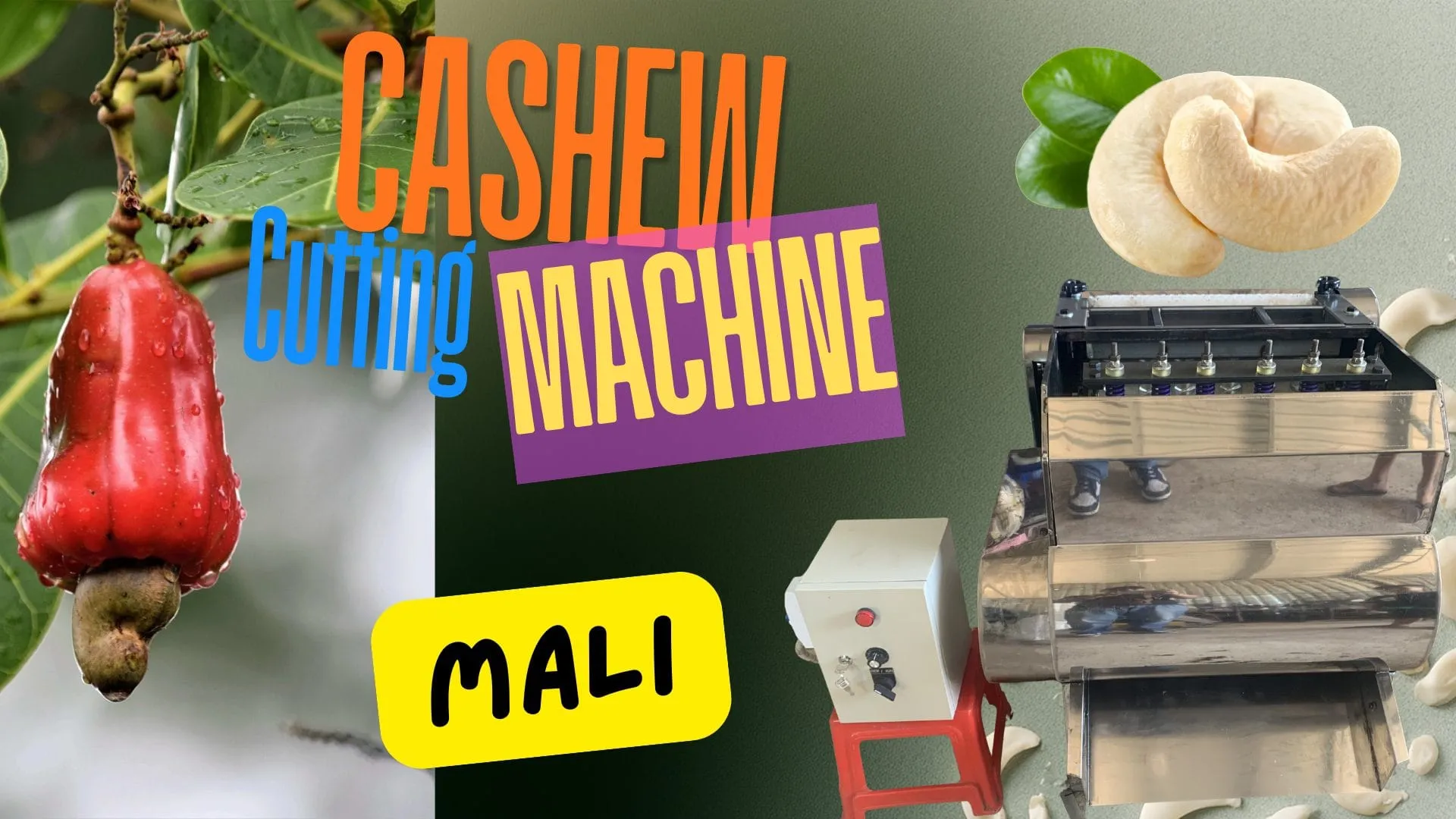
A young but expanding origin
Mali is not yet mentioned in the same breath as West Africa’s largest raw cashew nut (RCN) producers, but it has become one of the region’s more closely watched growth stories. Cashew was promoted over the past two decades as a diversification crop alongside cotton, mainly in the southern zones around Sikasso and parts of Kayes, close to the borders with Côte d’Ivoire and Guinea. As trees planted during that expansion reach full bearing age, volumes have been trending upward, though Mali’s output still remains modest next to established regional producers. Most of the crop is grown by smallholders on relatively small plots, often intercropped with other food or cash crops rather than on dedicated cashew estates.
Because Mali is landlocked, its RCN historically moved toward coastal export markets rather than being processed locally in large volume. That is starting to shift as national and regional policy has pushed harder for in-country processing to capture more value before the nut ever leaves West Africa - a trend mirrored across several neighboring origins.
Typical RCN size and shell profile
Buyers and processors sourcing Malian RCN generally report kernel sizes broadly comparable to neighboring Côte d’Ivoire and Guinea stock, though with more year-to-year and lot-to-lot variation. A few characteristics worth planning around:
- Kernel outturn can be less predictable than from origins with decades of formalized grading infrastructure, simply because collection and quality-control systems are still maturing.
- Shell moisture content is not always tightly controlled at the farmgate or aggregation-point level, which affects how nuts behave when cut.
- Overland transport before export can expose bagged RCN to heat and humidity swings that shift shell condition between harvest and processing.
- Varietal mix within a single lot is common, since much of the orchard base was planted informally rather than from a single certified stock.
None of this makes Mali’s RCN unworkable - it simply means a processing line built here benefits from more tolerance for batch variability than one built around a highly uniform, single-origin supply.
Why cutting-machine choice matters for this origin
Variable shell moisture and mixed lot quality are exactly the conditions where the wrong cutting machine shows its limits fastest. A machine calibrated tightly for one nut size and shell hardness will produce more broken kernels and lower whole-kernel outturn the moment it meets a less uniform batch - and for a processor still building its reputation with international buyers, outturn consistency is what earns repeat orders. Adjustable blade spacing and operator-friendly calibration matter more here than in origins where the RCN arriving at the factory gate is already tightly graded.
There is also a practical spare-parts argument. Because Mali is landlocked and processing capacity is still being built out, a breakdown that would be a minor inconvenience on a coastal supply route can mean a much longer wait for replacement blades or parts shipped in from overseas. Machines designed for straightforward field maintenance, with parts that do not require specialist servicing, reduce the downtime risk that matters most for newer processing operations still proving out their production economics.
Where OUTTURN’s factory-direct model fits
OUTTURN manufactures cutting machines at its own factory in Bình Phước, Vietnam - one of the world’s most established cashew-processing regions - and sells factory-direct to processors building or expanding capacity across Africa, Asia, and South America. For a growing origin like Mali, that means access to equipment refined against decades of Vietnamese processing experience, without the markup of importer or distributor layers, and with direct support on machine selection matched to the shell and moisture profile of local RCN rather than a one-size-fits-all spec.
Next steps
If you are scaling up processing capacity in Mali, the practical starting point is matching machine head-count and throughput to your realistic daily RCN intake, with enough calibration flexibility to handle lot-to-lot variation. Use the cutting line calculator below to size a line against your target volume, or reach out to OUTTURN directly with your typical RCN specifications for a tailored machine recommendation.